
How Data-Driven Risk Assessments Lead to Smarter IT Investments
Introduction
Technology problems rarely happen at convenient times. When a server goes down, when the security system gets compromised, or when the hardware fails, the results can be disastrous, leading to costs that businesses are not anticipating. For a growing company, these shocks have a more significant impact than on the IT department. They affect productivity, customer relations, and profitability.
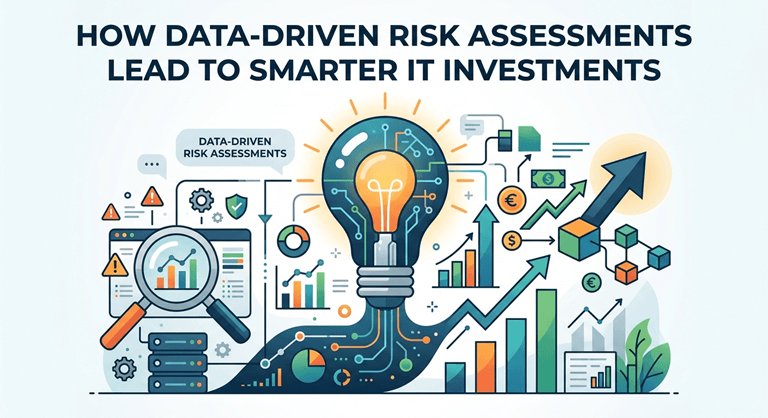
There are still many organizations that are using a reactive technology strategy – waiting until something goes wrong to solve the problem. This option can be an attractive proposition at first sight, but it can result in out-of-control costs and wasted time. With the growing reliance of businesses on digital systems, it’s essential to adopt a proactive strategy.
Instead of waiting for problems to surface, companies are turning to data-driven risk assessments to understand the health of their IT infrastructure. Having clear visibility into vulnerabilities and potential weaknesses allows leaders to make informed decisions and invest their technology budgets more strategically.
The Hidden Cost of Reactive IT
Traditional break-fix IT support is based on a very basic premise. If a problem occurs, the technician will be contacted to fix it. This can work in individual instances, but it adds to the uncertainty of planning in the long term.
Unexpected downtime has an impact on more than computers and servers. Access to vital systems is denied, customer service is delayed, and projects can fall to the wayside. Relatively brief outages can impact the organization as a whole.
Creating budgets is also a challenge with Reactive IT. The cost of technology can be difficult to predict since businesses can sometimes have unplanned repair costs and unexpected expenses to deal with. Rather than fostering growth, IT becomes a stressor and source of uncertainty.
This is all about technology management moving forward. Businesses can avoid most of the expenses of emergency repair work while keeping things running smoothly by catching potential problems beforehand.
What a Data-Driven Risk Assessment Looks Like
Having a data-driven risk assessment gives organizations a good sense of where their technology is. Instead of assuming what is required, businesses rely on monitoring and reporting tools to collect data on the infrastructure that they have.
The evaluations are conducted on servers, workstations, software, network devices, and security controls. They can assist in identifying dated systems, pending updates, performance bottlenecks, and security flaws that might not be identified.
The goal is to establish a baseline that supports smarter decision-making.
| Reactive Approach | Data-Driven Approach |
| Replace equipment after it fails | Identify aging hardware before problems occur |
| Assume security systems are adequate | Continuously monitor for vulnerabilities |
| Invest in technology based on trends | Prioritize upgrades based on business needs |
| Respond to downtime after it happens | Prevent disruptions through ongoing monitoring |
This approach helps organizations focus resources where they will have the greatest impact.
Turning Technical Data Into Business Strategy
Gathering information is just half the job. How businesses will take that information and put it into practice is also a question.
Strategic IT planning aids organizations in prioritizing projects, budgeting, and making sure that IT investments are meeting long-term goals. Instead of trying to keep up with the latest trends, the leaders can concentrate on the best tools and systems that provide the best value.
Many companies work with providers offering Augusta managed IT services to gain access to strategic guidance alongside day-to-day support. This approach helps bridge the gap between technical operations and broader business goals.
With decisions based on data, rather than assumptions, organisations are more likely to scale efficiently and not waste on unnecessary spending.
Strengthening Cybersecurity Through Proactive Planning
Security, along with other parts of IT strategy, is one of the most important aspects of any enterprise. Attackers target small organizations that don’t have a robust security posture, and businesses of all sizes are threatened.
By anticipating possible weaknesses, businesses can proactively plan and mitigate risks, reducing the potential for exploitation. Regular system updates, employee training, endpoint protection, and continuous monitoring all help to boost security.
Businesses have to take preventive actions as well to ensure that they comply with the requirements and safeguard sensitive information. Most importantly, it minimises the risk of costly disruption that can have a detrimental financial impact and reputation downfall.
Spending on cybersecurity shouldn’t be treated as a line item cost. It’s an investment in continuity and stability of the business.
Creating Predictable IT Costs
Predictability is one of the major benefits of proactive IT management.
In contrast to the typical situation of having unexpected repair expenses, organizations can plan for technology costs in their operating budget. This will enable leaders to work with greater confidence and without unpleasant surprises.
Fewer employee interruptions are caused by stable systems, as well. Businesses can avoid the hassle of repetitive technical issues and concentrate on providing customer service and meeting their goals.
With the passage of time, preventive maintenance and strategic planning can generate higher returns on technology investments. Less time spent on responding to crises and more on growth and innovation initiatives.
Conclusion
The use of technology has a purpose in the business and should not bring uncertainty. Businesses that can only afford a reactive support service may end up in a vicious cycle of out-of-the-blue bills and hassles.
Data-driven risk assessments give insight and allow for better decision-making. Knowing which areas to invest in and what areas are vulnerable on the basis of truthful data can enhance businesses’ security, efficiency, and technology budget predictability.
The most successful companies are those that plan ahead and reap the most benefits from their IT investment. An proactive approach would turn technology from an ongoing hurdle into a reliable tool that would help ensure success over time.
Popular on OTW Right Now!



About The Author

Gagan Bhangu
Founder of otechworld.com and managing editor. He is a tech geek, web-developer, and blogger. He holds a master's degree in computer applications and making money online since 2015.