
Designing Mobile Operations Trailers for Smarter Field Coordination
Introduction
Field operations rarely wait for perfect conditions. Emergency teams, government departments, utilities, infrastructure crews, public safety agencies, event organizers, and industrial service providers often need to coordinate people and information in places where a fixed office is not available. A mobile operations trailer gives those teams a practical way to bring structure into the field. It creates a controlled environment where staff can plan, communicate, monitor activity, and make decisions closer to the work itself.
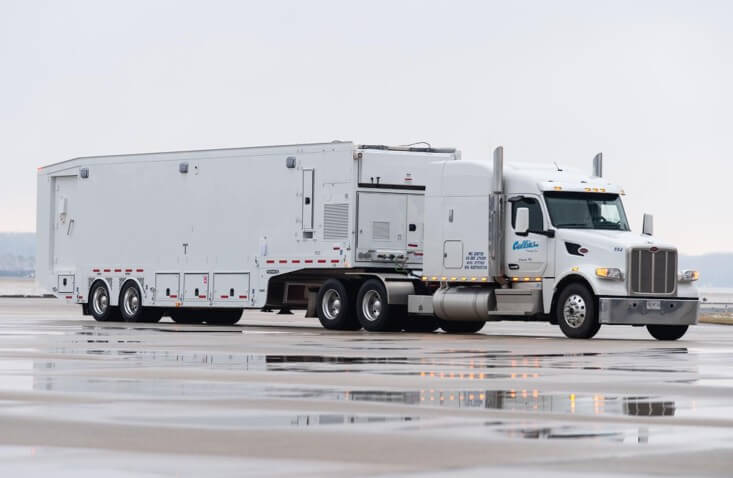
The purpose of a mobile operations trailer is not simply to provide shelter. It must function as a working hub. That means it needs reliable power planning, clear interior workflow, secure technology placement, durable construction, and enough flexibility to support different missions. A unit may be used for emergency response one week, public event coordination the next, and infrastructure support after that. Its success depends on how well fabrication, layout, technology, and human movement are brought together.
Why Field Teams Need Deployable Workspaces
Field teams often deal with scattered information. Calls, maps, personnel updates, equipment status, security reports, and weather concerns may all arrive at the same time. Without a central place to organize that information, teams can lose speed and clarity. A mobile operations trailer helps reduce that friction by giving leaders and support staff a dedicated space for coordination.
The trailer becomes a temporary office, communications room, briefing area, and planning station in one asset. It can be positioned near an incident, job site, command area, staging zone, public event, or service location. That proximity matters. When decision-makers are closer to the situation, they can see more context, communicate with field staff more directly, and respond with better timing.
A Workspace Built Around Pressure
The design of a field workspace has to respect pressure. People may be working long hours, handling urgent updates, coordinating with multiple departments, or managing technical equipment. The layout should help them think clearly. Workstations should be placed with enough room for movement. Screens should be visible without creating clutter. Storage should be secure but accessible. Lighting, seating, climate control, and sound management should support focus rather than fatigue.
Small design choices can change how the unit performs. A poorly placed counter can block movement. Exposed cables can slow work and create safety concerns. Weak storage can damage equipment during transport. A cramped briefing area can make coordination harder. Good fabrication and planning prevent those problems before the trailer ever reaches the field.
Operational Efficiency Starts With Better Systems
Modern operations are becoming more connected, automated, and data-driven. Manufacturers and technical organizations increasingly use intelligent systems to improve speed, accuracy, and resource use. Discussions about robotics and AI in operational efficiency show how better coordination between people, machines, and information can improve performance. In a comparable fashion, mobile field units operate in a similar manner, even in different environments. The aim is to eliminate any avoidable friction to make teams more decisive.
Mobile operations trailer helps with efficiency in the physical aspect of the work. There has to be a home for technology. Individuals require definite job assignments and work areas. Equipment needs protection. Communications must be able to reach a reliability and stability. The trailer designed for these needs becomes a part of the system,m which enables teams to get from information to action.
Technology Needs a Strong Physical Shell
When the physical environment is not conducive, command software, cameras, radios, computers, mapping, cellular systems, and monitoring screens will not work well. Mounting points should be securely attached. Wiring should be safeguarded. Planning of power systems is important. Equipment needs to be safely held on work surfaces. Power ventilation and climate control may also be a consideration when using electronics for extended periods of time.
For this reason, the design of the trailer itself should be included in the technology plan. Structure is not distinct from tools within structure. It helps protect them, structure them and enables employees to employ them appropriately. A well-made shell can help to prolong the life of equipment and minimize field problems that might otherwise cause interruptions in operations.
Building Field Mobility With Practical Control
If the organization requires a mobile solution for public safety, emergency management, utilities/infrastructure work, event control, or government operations, the build needs to be mobile, communications-capable, durable, and have an interior workflow. A purpose-built mobile operations trailer gives teams a controlled environment where information, people, equipment, and decisions can be coordinated closer to the field.
Experiential Environments and the Value of Presence
Mobile operations trailers are frequently adopted for severe work in the field, but like experiential environments, the presence is important. The physical environment can influence a person’s view of a situation, how he or she communicates with a team, and/or his or her trust in an organization. The trailer can be a symbol of readiness in a public operation as well. It demonstrates a sense of organisation, too, ls and coordination space.
This connection between physical presence and audience engagement is visible in discussions of experiential marketing investments, where companies use real-world environments to create stronger interaction. The intent of the field operations is other than the purpose, but the lesson still applies. The physical design can influence perception, behaviour, and help create structure in complex activity.
Professional Appearance Supports Trust
A mobile operations trailer can be utilized around partner agencies, contractors, event personnel, community members, and/or the public. Its occurrence can impact the interpretation of the situation by the people. An organized, clean, and marked unit demonstrates readiness. It is a helpful way for people to see where they are being coordinated and provides staff with a point of authority.
It should not be superficial, because if it is, that is not a professional presence. The exterior should correspond to the function in the interior. If the exterior appears ready but the interior is not, it makes for a weak impression. The best Units are both clear and useful. Look capable because they’re capable!
Brand Section: Craftsmen Industries
Craftsmen Industries is a name synonymous with custom fabrication, specialized vehicles, government and public safety units, field-ready builds, branded trailers, rs and fleet graphics. The reason for its importance in this class is that it is necessary to develop trailers and vehicles that enable serious work and still be professional in public appearances.
The final product must be structured, technological, designed, robust, and identifiable for companies that have operational assets with mobility. It might have to be a command space, mobile office, briefing space, communications center, or field support center. In the case of Craftsmen Industries, they are in a business that relies on the mission and image of the organization that uses it.
Designing for Repeated Deployment
A mobile operations trailer should be designed to be deployed repeatedly, and with a purpose other than showing off. It can be used at various locations such as over time, across cities, job sites, emergency areas, event sites, and training sites. Every time they use it, it serves to check the strength of the structure and the practicality of the structure’s layout. Repurposed materials, safe storage, functional systems, and simple surfaces aid the trailer’s reusability in the field.
The future adaptability is also important. Communication tools change. Operational workflows evolve. May require new equipment. A smart trailer design enables updates without a complete rebuild of the trailer. A range of protected wiring paths and accessible service spaces, flexible workstations, and modular equipment zones can help to prolong the life of the asset.
A Better Trailer Creates Better Rhythm
A rhythm is provided by good field coordination. People are aware of their place, reporting locations, equipment availability, and decision-making. A good trailer sustains that rhythm without causing any disturbance. It helps to direct motion, divide work, guard tools, and provides a reliable workstation for teams to return to during busy operations.
The true benefit of a mobile operations trailer. It doesn’t answer all the problems in the field, but it provides teams with a more solid foundation to build on to answer them. With proper planning of the space, the work is not so scattered and controlled.
Conclusion
A mobile operations trailer can be a practical solution to a real field problem – when a coordinated team of people, equipment, technology, and decisions is needed, but away from a fixed facility. It’s not just about the movements of this locket. It is attributed to a way of communication, system protection, staff organization, and a professional control point in a changing environment in the trailer.
Deployable workspaces will continue to be vital for agencies and industrial teams, event operators, utilities, and public safety organizations as the demands in the field become more complex. The structure that a strong trailer provides teams in conditions of fluidity. It makes moving an act of readiness and enables organizations to order up the spaces where decisions are most important.
Popular on OTW Right Now!


About The Author

Gagan Bhangu
Founder of otechworld.com and managing editor. He is a tech geek, web-developer, and blogger. He holds a master's degree in computer applications and making money online since 2015.