
Why SMS Verification Remains a Core Part of Modern Online Security
Creating an online account has become a routine part of everyday life. From signing up for a social network to an online marketplace, productivity tool, or cloud service, verification is usually one of the first steps users will go through.
SMS verification is still one of the most popular methods of authentication today. SMS verification is still a viable and convenient option for millions of users all over the world, despite the rise in newer technologies like passkeys, biometric authentication, and hardware security keys.
The challenge for businesses and platform operators isn’t so much identifying users. The difficult part is developing a registration system that’s secure, convenient, and accessible. This is where SMS verification still has a part to play.
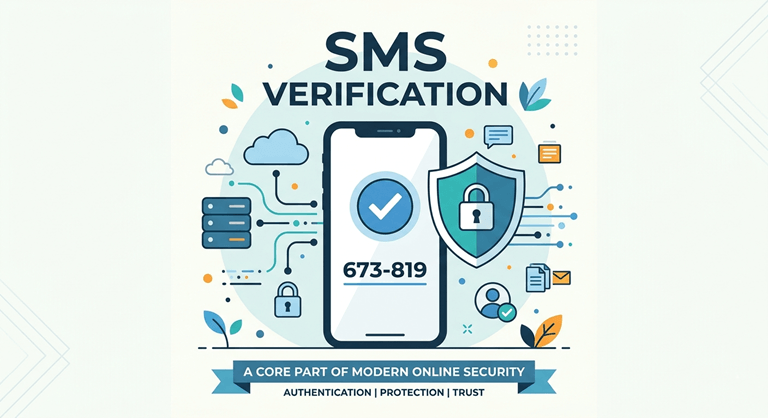
What Is SMS Verification?
SMS verification is a process that involves the user entering a code that is sent via SMS to the user’s mobile phone number. This code is usually addressed in account registration, login, password recovery, or whatever other security-oriented activity is performed.
The point of it is simple enough: ensure that the user has a proper telephone number before allowing them to enjoy some aspects of the platform.
This method doesn’t necessarily provide a foolproof verification, but it will help lower spam accounts, automated signups, and many various types of platform misuse.
Why Platforms Still Use SMS Verification
SMS verification is still widely used for many online services because it is easy for users to comprehend. SMS verification, unlike more sophisticated authentication methods, does not need any extra software or hardware applications.
Most users are familiar with how to get a text message and enter the verification code. This familiarity aids platforms in sustaining a fluid onboarding process and provides an extra layer of security.
It’s especially crucial for startups or a digital service that is growing to minimize the friction during the registration process. Each extra step in the registration process can boost the drop-off rates of users. The SMS verification is a good balance of usability and security.
The Role of SMS Verification in Preventing Abuse
Creating automated accounts and bots is always a concern for online platforms. The fake registrations may be employed in spam marketing, referral abuse, fake reviews, credential stuffing attacks, etc. Fake registrations can be used in spam marketing, referral abuse, fake reviews, credential stuffing attacks, and more.
If not verified, these issues can easily get out of hand.
SMS verification serves to make it more difficult to generate bulk accounts. Even though determined players can try to circumvent verification systems, having to have access to a phone number will increase the hurdle for them to try to do so.
This extra friction enables a healthier user base for a lot of platforms.
Modern Security Goes Beyond SMS
Be sure to know that SMS verification is not the primary way that most companies use to secure their systems. Most platforms today integrate several trust signals to assess user activity.
These signals can be device fingerprints, IP reputation, geographic consistency, characteristics of browsers, login history, and behavioral analysis.
Therefore, just because you receive a verification code does not mean that your account is guaranteed to be approved successfully. Platforms are increasingly employing complex risk analysis systems that use several factors to decide how to be more secure.
SMS verification is just one part of a comprehensive security approach.
Privacy Considerations in the Digital Era
Users are becoming more aware of their privacy issues and are careful to distribute their personal data to the right places.
Phone numbers are used as identifiers in many online services, and are frequently persistent. For this reason, some users choose not to use their main personal number for service testing, service evaluation, or even for temporary accounts.
This has helped drive the demand for more flexible solutions to verify, including both to support valid testing and short-term verification.
Many users rely on an SMS verification platform when they need temporary access to verification codes for testing, platform evaluation, or short-term account creation workflows.
In responsible use, these services can serve users’ interests in protecting their privacy and streamlining verification processes . In responsible use, these services can support the interests of users by protecting their privacy and simplifying verification processes.
How Businesses Benefit from Verification Systems
Security teams aren’t the only ones who can benefit from verification systems; the business itself can benefit, too.
By minimizing fake accounts, data quality is enhanced, marketing efforts are more accurate, customer support operations are more efficient, and the platform becomes more reliable. It can also help to lower infrastructure expenses from automated abuse.
This is especially important for SaaS, e-commerce, marketplaces, and online communities to maintain a quality user base in order to grow in the long term.
One of the most convenient methods to help with this goal continues to be SMS verification.
The Future of Online Verification
It’s unlikely that there will be a single authentication solution in the future, but rather a variety of technologies. AI-based risk analysis, hardware security keys, and passkeys are likely to become more prevalent.
Adoption of the global scale, however, takes a while. There are varying degrees of access to newer technology in different regions, devices, and groups of users.
SMS verification is likely to stay in the authentication environment for the foreseeable future, due to its simplicity and accessibility.
It will not be replaced in its entirety, but will be used in conjunction with newer security technologies, which will form part of a layered security verification approach.
Conclusion
SMS verification is still relevant because it tackles a common problem that many online platforms encounter: trust during user onboarding.
It’s not a foolproof solution, but it can certainly help limit abuse and enhance account quality and registration user experience.
With the growth of digital services, those that merge usability, privacy, and security will most likely be the ones to create trusted online experiences. SMS verification is a key component of that.
Popular on OTW Right Now!
-
 How Tech Companies Use Individual Development Plan Examples to Improve Performance and Career Progression
-
 Understanding Data Acquisition: A Comprehensive Overview
-
 Step-by-Step Guide: How to Use Free NY Paycheck Calculator 2026
-
 The Etiquette of Unknown Numbers: When to Call Back and When to Investigate First




About The Author

Gagan Bhangu
Founder of otechworld.com and managing editor. He is a tech geek, web-developer, and blogger. He holds a master's degree in computer applications and making money online since 2015.