
Unlocking The Soundscape: How Smart Hearing Technology Redefines Connectivity
Imagine walking into a crowded coffee shop and being able to tune out the background chatter while still catching every word your friend says across the table. That used to be a pipe dream for people with hearing loss. Today, it is closer to everyday reality.
The Technology Has Changed Everything
When it comes to hearing tech, it is far from your grandparents’ whistling devices. Modern hearing aids are small computers in the back or inside the ear that process thousands of sound signals per second, and make decisions in real time as to what is important to listen to. It has been tremendous progress.
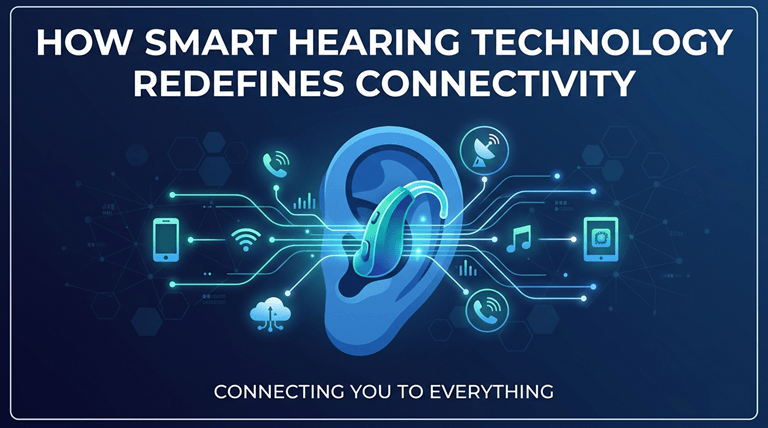
When you look at what companies like Phonak are bringing to the table, the picture becomes clear. You’ll find that Phonak hearing aids connect directly to smartphones, televisions, and other Bluetooth-enabled devices, putting the controls right in your pocket. Volume, program switching, and even finding the lost device can be controlled with an app! Gone are the days of playing with the dials, which are now too small.
What Connectivity Actually Means For You
Not only is it a buzzword here. It alters the way you go about your everyday life in real and meaningful ways. Think about how you can benefit from direct streaming:
- All incoming phone calls go to both ears (left and right), so it is easier to hear all the words without straining in the process.
- Music and podcasts are played clearly – this is not possible with traditional hearing aids.
- You listen to the TV music without having to dial up the volume until it is loud enough for you to hear it, and no one else will be impacted.
- Video calls are no longer a worry; they’re easy to deal with.
In addition to streaming, there are now many devices which are rechargeable devices. No more going to the pharmacy to search for the teeny hearing aid battery! They come with a plug to be connected at night and are ready by the morning.
The Role Of Artificial Intelligence
Here is where things get really interesting. AI-powered hearing aids learn your preferences over time. They notice that you always turn up the volume at your weekly team meetings or that you prefer less noise reduction when you are outdoors. Then they start making those adjustments for you automatically.
Another aspect of awareness, which AI brings to the table, is spatial awareness. Some devices are able to tell the direction sounds are coming from and focus on the sounds most relevant to you. It is switching seamlessly to suit its surroundings without you having to consider it, be it at a dinner party or at the bus stop on a busy road.
Staying Connected To The People That Matter
Hearing loss has always carried a social cost. You start avoiding gatherings. You nod along even when you have missed the point. You feel a step removed from conversations that used to come easily. Smart hearing technology is chipping away at that reality.
Some devices will now even allow you to get your doctor to adjust the settings for your device remotely, so you don’t have to come into the clinic. You give them feedback using an application, they tweak the program, a nd the changes are pushed back down to you. Simple and efficient.
A New Kind Of Listening
This is not a technical change; it’s a bigger change. It’s all about regaining participation. You should have your grandchild’s laugh loud and clear. You don’t want to be the person who is trying to fill the meeting in while you’re following.
Smart hearing technology doesn’t provide 100% hearing. But it provides you with tools that operate in your life, not around your life. The soundscape is beginning to return, bit by bit.
Popular on OTW Right Now!

About The Author

Gagan Bhangu
Founder of otechworld.com and managing editor. He is a tech geek, web-developer, and blogger. He holds a master's degree in computer applications and making money online since 2015.