
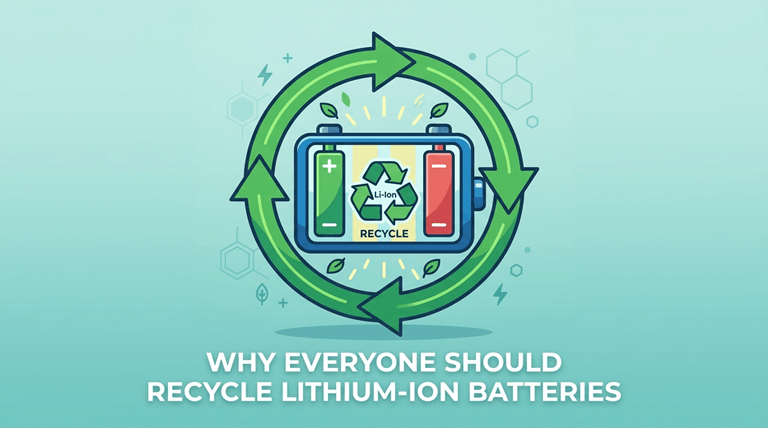
Why Everyone Should Recycle Lithium-Ion Batteries
Lithium-ion batteries power many of the devices people use every day. They are found in cell phones, laptops, tablets, power tools, e-bikes, scooters, medical devices, cameras, power banks, backup systems, and many other rechargeable products.
While these batteries are convenient and efficient, they should never be thrown away like regular trash. Lithium-ion batteries contain stored energy, metals, and chemical materials that require responsible handling at the end of their life. Proper lithium-ion battery recycling helps reduce safety risks, protect the environment, and recover valuable materials that can be reused.
Lithium-Ion Batteries Can Create Fire Risks
One of the most important reasons to recycle lithium-ion batteries is safety. These batteries are designed to store a large amount of energy in a small space. If they are crushed, punctured, overheated, or short-circuited, they can become unstable.
Lithium-ion batteries can be damaged during collection or processing if they are thrown in a trash can, dumpster, compactor, or mixed recycling container. This may result in overheating, smoke, sparks, and/or fire.
This risk is particularly relevant for organisations or entities that pick up batteries on a larger scale, such as businesses, schools, warehouses, repair shops, municipalities, and others. A little bit of a battery is not that big of a problem, but much of the problem lies in the fact that if there are many used batteries that are improperly stored or disposed of, then the risk is much higher.
Recycling Keeps Batteries Out of Landfills. Lithium-ion batteries should not be disposed of in landfills or waste streams. Damaged, weathered, or mishandled batteries pose an environmental risk.
Recycling is important to ensure that the materials in batteries are not disposed of in soil, water, or waste disposal systems that are not engineered to deal with them. Recycling provides a safer and more responsible way to dispose of old batteries than leaving them in drawers, closets, garages, warehouses, or landfills.
Valuable Materials Can Be Recovered
Materials that can be recovered by the recycling process are found in lithium-ion batteries. Such materials can be lithium, cobalt, nickel, manganese, copper, aluminum, steel, and graphite, depending on the type of battery.
The recovery of these materials contributes to a more circular battery supply chain, reduces waste,e and enables a more sustainable approach. With an increasing number of products being powered by rechargeable batteries, the recycling of batteries is an important aspect in the responsible management of resources.
Recycling is the process of turning used batteries into useful materials, rather than discards.
Recycling Supports Safer Homes and Workplaces
Many people have stored old lithium-ion batteries, but they are unaware of the risk. Loose rechargeable batteries, used phones, broken laptop batteries, power tool packs, a nd other items can be stored for months or years in drawers, cabinets, stock rooms, or maintenance areas.
Appropriate recycling can help to get rid of these batteries prior to them becoming a danger. Swollen, leaking, hot, punctured, and damaged batteries must be handled with extra care and segregated from normal end-of-life batteries.
Tape should be used to prevent short circuits on the exposed terminals of loose batteries if necessary.
Everyone Plays a Role in Battery Recycling
Large companies are not the only places where Lithium-ion Battery Recycling is important. Everyone from home to office to school, retail to repair shop to public facility is involved in battery diversion from the wrong waste streams.
If battery waste is a continuous issue for your business, it may be easier, safer, and more organized to work with a battery recycling provider.
Final Thoughts
All lithium-ion batteries should be recycled as they contain valuable materials, components, and stored energy, which should not be thrown into the trash. Recycling the batteries properly helps to minimise fire hazards, safeguard the environment, reclaim reusable components, and manage battery waste more cleanly.
With the increasing adoption of rechargeable devices, it is crucial to have responsible lithium-ion battery recycling. If you already have a single old phonbatterer, or a collection of commercial battery waste, it is better and safer to recycle.
Popular on OTW Right Now!



About The Author

Gagan Bhangu
Founder of otechworld.com and managing editor. He is a tech geek, web-developer, and blogger. He holds a master's degree in computer applications and making money online since 2015.