
E-Bike Maintenance: A Practical Routine for Everyday Owners
The ideal maintenance regime is one that you can remember and carry out without every ride becoming a maintenance session. E-bikes have the usual bits and pieces of a bike that need looking after, plus a battery, electrical connections, and controls that have their own set of requirements. Having a good system in place will help you spot problems before they turn into a major disruption to your ride.
Keep your bike manual in an easily accessible place. The manual will contain the brake, tire, and accessory instructions for your bike. Rather than just go with some generic internet schedule, use the manual to produce a simple pre-ride checklist, a cleaning regime and a record of when you’ve had it professionally serviced.
Before a ride, look for changes
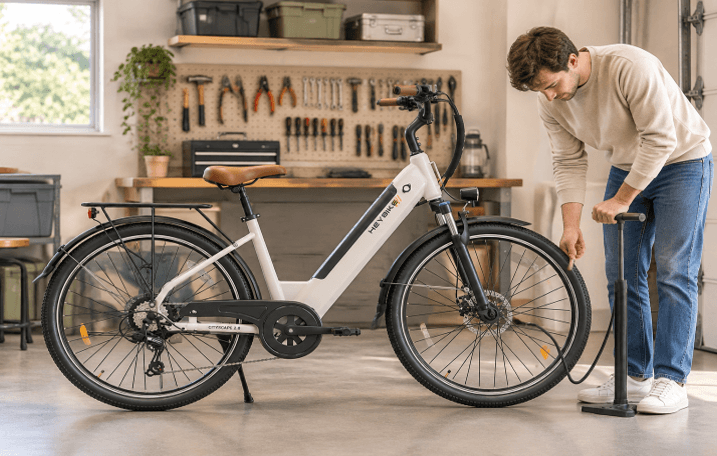
Start with the tires. Check for any damage, anything stuck in the tread, or a tire that looks a bit flat. Use a gauge and go by the pressure advice for your bike, your tires, your rims, and how much you’re carrying. The number on the sidewall isn’t necessarily the correct pressure for every ride.
Make sure the wheels, handlebar and saddle are all secure by carrying out the manufacturer’s inspection procedure. Walk the bike and test the brakes before you start to ride. If you hear a new rubbing noise, the brake lever feels different, or the brakes don’t stop as well, then have a look at it before you go.
Turn the lights on and look at the display for any warnings. Make sure the bags and straps aren’t going to touch a wheel or be in the way of the steering. If you’ve removed the battery, be absolutely sure it’s back in and securely locked in as per the manual. Once you’ve done them regularly, they become second nature, and the checks are very quick.
Give the battery a suitable charging place
Always use the charger that’s specified for your battery and follow the instructions that come with it. Just because a connector will physically fit doesn’t mean it’s safe to use. Charge in a dry area, away from anything that could catch fire, and with the exit clear. Stay right there with it, awake and alert during the charging process, and unplug it as soon as it’s finished.
Check the battery case, cable, and connector for damage prior to plugging it in. If the battery is swollen, leaking, too hot, or otherwise damaged, then don’t use it and get advice from the manufacturer or a service provider. Never open a battery pack yourself to investigate any problems.
Follow the storage advice for your particular battery. If you’re not going to be using the bike for any length of time, then note the recommended temperature and charge level from the manual and stick to that. Set a reminder to check the battery when the manual says rather than just leaving it plugged in.
Clean gently and inspect as you go
Turn the system off and follow the manual before cleaning. Only use the cleaning methods specified and keep water away from the electricals. No pressure washing of the e-bike. After a wet or dirty ride, clean off any visible grime before it has a chance to build up.
While you’re wiping down the frame, check the places you’d normally miss, i.e., cable runs, underneath the bags, around the carrier mounts. Take a photo of anything that looks loose, damaged or odd. A photo is often far more useful to a mechanic than just describing a strange noise.
Clean and oil the chain in accordance with the drivetrain instructions and using the appropriate bike product. Don’t get any lube on the brakes and wipe up any excess as per the instructions. Hub motors and mid-drive systems will have different chain wear, so don’t expect all e-bikes to be the same in that respect.
Schedule wear checks around use
Tires, chains and brake pads all wear out over time. How frequently they’ll need servicing is going to be down to the parts themselves, how you ride and the conditions. You should check them as often as the manufacturer recommends and after any significant change in the way your bike feels. Riding in wet and busy conditions will generally mean you’ll need to check them more frequently than if you’re just riding in dry weather.
Stick to the pad limit for your particular brakes rather than trying to apply some general thickness rule off the internet. If you’re not comfortable with checking the brakes then get a qualified mechanic to do it. The same applies to hydraulic work, wheel work, electrical work, and torque. Know the bit you’re working on and have the correct instructions before you start.
When shopping for an electric bike, consider maintenance access alongside fit and storage. Ask how to obtain the manual, which replacement wear parts the model uses, and where you would take it for service. Those answers help you plan ownership before the first repair is needed.
Keep a small service record
A simple notebook or a note on your phone is quite adequate. Just record the date, the mileage, any symptoms you observe, what work was carried out and the details of any parts replaced. Keep the receipts. If the problem recurs, you’ll be able to tell whether it started before or after a tire change, a wet ride, etc.
For owners researching Heybike, the current official resources are the starting point for model information and support contacts. Read the terms that apply to your purchase rather than assuming that every workshop or electrical modification is covered. Good records help the service provider understand what has happened.
Make the routine easy to continue
Store your gauge, your clean cloths, and your care products all together. Take the time to do a more thorough check prior to a big trip. Use your routine to spot any changes, to keep on top of the normal care, and to get help when something is beyond the normal. Don’t forget to write your next service date in your ride notes.
Popular on OTW Right Now!




About The Author

Gagan Bhangu
Founder of otechworld.com and managing editor. He is a tech geek, web-developer, and blogger. He holds a master's degree in computer applications and making money online since 2015.