
The Hidden Value of an End-to-End Logistics Strategy
Transportation does more than dictate when your deliveries get there. It has a bearing on inventory, customer service, headcount, cash flow, and the day-to-day running of the business. If the processes are siloed, then delays can go completely unnoticed until they start to have a negative impact in terms of cost or production. A full logistics strategy brings together freight, warehousing, order fulfillment, reporting, and supplier management. With that complete picture, you can identify waste much earlier, react to changes in demand, and set realistic service levels without having to overstaff.
One Strategy, Fewer Gaps
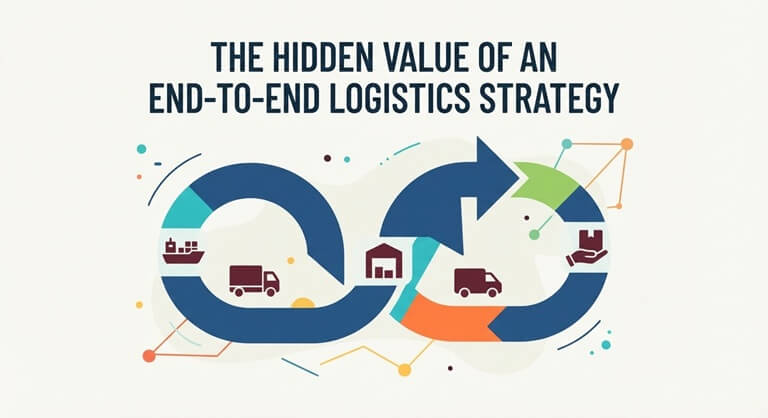
Raw materials may leave a supplier, enter a plant, pass through storage, then reach a customer under separate contracts. Each transfer can obscure responsibility for timing, damage, billing, or status updates. Full-service transportation logistics solutions connect these movements through the same operating model. Teams gain a single view of ownership, communication, and freight decisions, which reduces unnecessary gaps.
Better Capacity Planning
Capacity requirements will change throughout the year. A promotion, a new product, a supplier issue, or a local spike in demand can all result in a sudden change in the volume of shipments. A single plan brings together the dedicated trucks, the regional services, the short hauls and the outside carriers. That mix of resources enables the company to have the right equipment for the regular routes and the right flexibility for the busy periods. Capacity planning becomes a considered business decision rather than just a reactive one.
Lower Transportation Waste
Freight expense includes more than linehaul charges. Empty miles, detention, poor route selection, partial loads, and repeated handling can quietly reduce profit. An end-to-end logistics program examines these costs together. Shipment planning can group compatible orders, while route analysis can limit unnecessary distance. Freight audits may also reveal incorrect charges, and even minor corrections across hundreds of loads can produce substantial yearly savings.
Service Quality Gains
Customers judge a company on how their deliveries go rather than who’s responsible inside the company. A late delivery, a damaged package, a missing delivery, or a missing tracking number can all damage trust very quickly. A well-defined transport model will have clear service level objectives for every shipment. There will be tracking tools to provide timely updates and alerts to flag any shipments that require attention.
Stronger Inventory Control
Transportation options have a direct bearing on inventory too. Early shipments will increase your storage costs and late ones could result in stockouts or even production stops. If you have the information, you can time your shipments to match warehouse activity and sales requirements, and this will enable you to make better restocking decisions. You can thus keep the right amount of stock in the right place and avoid the need for last-minute transfers and excessive storage costs.
Data That Supports Action
Good logistics support involves the provision of reports which will show the full movement of the goods. A TMS will bring together rates, carrier performance, delivery times, exceptions, and shipment status so that management can compare their plans against actual results. The clear metrics will also highlight the problems that are occurring, such as routes with excessive waiting times or carriers with poor delivery records. The right information enables management to make the necessary changes in a smooth and effective manner.
Flexible Modes and Providers
Every shipment may require a different type of service. A full truckload is appropriate for large volumes; smaller deliveries will require other options. Expedited service is available for time-sensitive requirements, and intermodal is the right option for longer hauls. Having access to an approved carrier list enables a company to match each load with the correct service, and that’s something a good logistics provider will have. It gives you the flexibility to maintain high service levels without all your loads being in one bucket.
Value Beyond Freight Rates
The lowest price doesn’t necessarily equate to the lowest total cost. The carrier that’s the cheapest might be the one that’s late, might have a terrible track and trace, might cause a lot of extra work for the warehouse team. A full logistics review takes into account labor, storage, claims, customer penalties, and admin time. That broader view of the cost is what enables you to understand the impact of your transport decisions on your profitability and is what enables you to have better conversations with your suppliers, better network planning and better service strategies.
A Practical Path Forward
A good strategy begins with a proper assessment of the current situation. The ops team can map the flow of shipments, check delivery performance, look at any additional charges, and identify any repeat handoffs. From there, the leadership team can establish service priorities and select the right KPIs to track against what the customer needs. You can then test out new ideas on pilot routes before rolling them out more widely. Regular reviews are key to keeping the program in line with the volume of shipments, the state of the facilities, and the overall business objectives.
Final Takeaway
End-to-end logistics adds value by linking all the elements of the process. Transport is at its most effective when it is sharing information with the warehouse, the suppliers, finance, and customer service. You end up with better cost visibility, better delivery control, better inventory decisions, and more flexible capacity. It may take a while to get there, but it’s a benefit to the whole business.
Popular on OTW Right Now!



About The Author

Gagan Bhangu
Founder of otechworld.com and managing editor. He is a tech geek, web-developer, and blogger. He holds a master's degree in computer applications and making money online since 2015.