
How Connected Car Technology Is Changing the Driving Experience
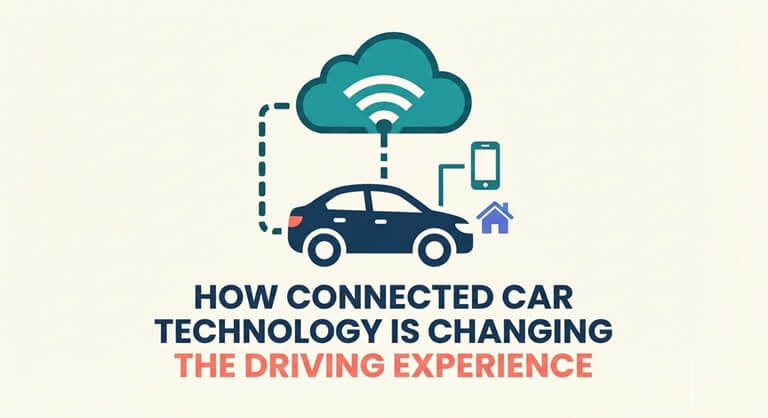
A long time ago, car technology consisted mainly of navigation facilities, a radio, and maybe a Bluetooth link for making hands-free calls. Nowadays, a great many vehicles are connected to mobile apps, cloud-based services and intelligent systems which operate in the background as you drive.
As manufacturers keep on bringing in new digital features, the relationship between drivers and their cars is becoming more interactive, more informed and, in many cases, more convenient.
Enhanced Safety and Security on the Road
Connected car technology helps you make better decisions. You can now monitor road conditions, traffic congestion and potential hazards in real time, giving you opportunities to react earlier than you otherwise might.
Picture yourself moving around a city you don’t know well during rush hour; rather than waiting in a queue because of an accident ahead, your navigation system can detect the delay and suggest an alternative route before you get there. Not only does this conserve time, but it also helps to reduce the stress experienced on busy trips.
Safety features have also developed. Some connected vehicles can automatically contact emergency services after a serious collision, while others send alerts if someone tries to move the vehicle without authorization or if a door stays unlocked. These features offer many drivers a greater sense of peace of mind, especially when parking in busy public areas or when leaving their vehicle at an airport for several days.
Personalized Driving Experiences
Connectivity also supports services like telematics insurance, which uses driving data to build a picture of how a vehicle is used. Depending on the provider and policy terms, careful driving habits may help some motorists access more competitive premiums.
The Impact of Data and Connectivity on Mobility
The information generated by connected cars extends beyond the individual vehicle. Manufacturers, transport providers and local authorities use aggregated data to understand how roads are being used and where congestion occurs most frequently.
This usually means drivers receive more accurate travel information. A navigation system is able to combine data from thousands of connected vehicles in order to detect changes in traffic conditions all day long. When a road closure takes place during your trip, the connected services can recalculate your route almost immediately.
Maintenance also provides a practical benefit. Many vehicles continuously monitor various components and alert you when action is needed. For example, if the pressure in the tires decreases gradually over a number of weeks, the system will warn you before the problem starts to affect fuel economy or handling.
Challenges and Considerations for Drivers
Even though there are advantages, connected technology brings with it new responsibilities, with privacy being a key issue. It is helpful to look over the permissions and data-sharing options that are provided via the vehicle’s app or onboard system before turning the connected services on.
Cybersecurity also remains a factor. As vehicles become more connected, manufacturers continue investing in software updates and security protections. However, drivers still play a role in maintaining security by keeping vehicle software current and protecting account credentials with strong passwords.
Popular on OTW Right Now!



About The Author

Gagan Bhangu
Founder of otechworld.com and managing editor. He is a tech geek, web-developer, and blogger. He holds a master's degree in computer applications and making money online since 2015.