
Why Low-Volume CNC Production Is a Strategic Advantage for Product Teams
Product development rarely moves in a straight line. A component that looks perfect in CAD may need a larger radius, a different alloy, a stronger thread, or more clearance once it is assembled and tested. The difficult stage is often not making the prototype or ordering thousands of units. It is producing enough reliable parts to learn from the real world without taking on the cost and risk of mass production.
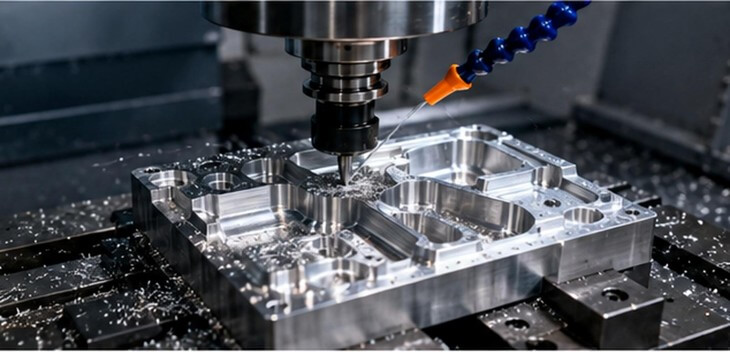
That is why low-volume CNC production has become an important factor in the production process. It provides engineering/operations teams a safe passage from design validation into commercial scale. Manufacturing is not simply a one-shot, but can be evolved through a series of measurable steps, each one of which can be refined.
The Production Gap Most Teams Underestimate
A prototype is a test that successfully demonstrates that an idea could be. A pilot run validates the concept to be repeatable, buildable by others, transportable, installable, usable, and maintainable. The two tests are quite different. The right part or two done well might qualify for design review, but 50 could fall short due to variability, awkward assembly requirements, damage to parts during packaging, or characteristics that require longer time to review.
You can end up putting those problems into inventory by going from a prototype directly to a large order. That exposure is lower with low-volume production. It allows you to develop sufficient components for beta programs, field trials, early adopters, training, service inventory, or small-scale releases without a significant financial impact.
Why Low-Volume CNC Fits Modern Product Development
It turns revisions into controlled experiments.
CNC machining starts with a digital geometry and the programmed process so that a good design can be repeated without the lengthy lead time of a production mold. If there is a need for a revision, the team can revise the model, evaluate manufacturing impact, and re-run the batch. Programming, workholding, or inspection planning may be necessary if the change is to be made, but the expense of having to replace dedicated hard tooling is typically avoided.
This simplifies testing of design decisions. Physical components can be used to test 2 bracket thicknesses, alternative mounting patterns, or different heat-sink finishes instead of discussing them in a meeting. As each run is completed, it provides evidence to inform the next release.
It limits financial commitment before demand is proven.
Forecasts can be helpful, but it is still a forecast. A short run is the time period it takes to sustain a launch without stuffing a warehouse with a design that might alter. It also enables procurement teams to deal with seasonal, uncertain, or fragmented products. The cost per part might be more expensive in a small order than it would be in a big order. Still, the overall risk of the business experiencing inventory, rework, and obsolescence may be significantly lower.
It produces parts that behave like production components.
Any of the same grades of aluminum, stainless steel, engineering plastic, copper, brass, or titanium used for the finished part can be used for the machining. This is important when it comes time to assess threaded joints, bearing fits, thermal properties, sealing surfaces, corrosion resistance, or structural performance. The problem areas may not appear in a prototype that looks like the actual product.
It creates a repeatable bridge to launch.
A well-managed short run does more than provide parts. It evaluates the Drawing, the Tolerance Scheme, the Inspection plan, Assembly Instructions, Packaging, and Supplier Relationship. When the size of the order is great enough to support a larger scale production, the organization has already had to deal with many of the questions that typically crop up when trying to rush a production into the market.
Where This Manufacturing Model Creates the Most Value
Low-volume CNC works particularly well for situations where the risk of error is high, and/or inventory holding costs are not an attractive investment. Common applications include:
- Hardware startups building pilot units for customers, investors, or certification testing.
- Robotics and automation teams refining brackets, housings, grippers, fixtures, and sensor mounts.
- Industrial companies replacing discontinued parts or supporting equipment with a long service life.
- Electronics businesses producing enclosures, heat sinks, faceplates, and internal structural components.
- Manufacturers with high-mix product lines that need many part numbers in modest quantities.
It can also be used to aid the production of bridges as permanent tooling is being manufactured, or as a second source of supply should there be a break in the supply chain. The key word is flexibility – the company can purchase what is required this year, and purchase what is required next year, if necessary.
Choosing a Supplier Is an Engineering Decision
Teams comparing suppliers can use small-batch CNC machining services as a starting point, then evaluate whether the provider’s machines, materials, inspection methods, scheduling, and communication process match the actual part.
The price of a low quote is not worth it if the supplier is unable to specify a critical bore, ensure a cosmetic surface, or describe what the part will be doing while it is being machined. The optimum choice will depend on the geometry, risk, and uses of the component.
Match the process to the geometry.
Three-axis milling can efficiently cut many plates, pockets, and prismatic parts. Four- and 5-axis machining can minimize set-ups for parts that require machining on multiple faces or parts where access to tools is difficult. Shafts, bushings, and other rotational components are typically turned. However, grinding or electrical discharge machines may be required for hardened materials, or for achieving the high tolerances and sharp internal features of a part. A smart supplier will outline the proposed route, rather than say that the part is possible.
Treat tolerances and inspection as part of the design.
Each tight tolerance requires some manufacturing and verification. Product teams need to determine the dimensions responsible for functionality and set reasonable bounds on them, and be more lenient on the other dimensions. The quote request should also include the type of evidence required, such as a basic inspection report, material certification, first-article results, or measurement data for selected critical features.
Look for practical design-for-manufacturing feedback.
Helpful feedback is specific. It helps to locate an internal corner that needs a smaller tool, a deep pocket that can cause chatter, a wall that can warp, or even a finish callout that conflicts with a close fit. Good DFM has nothing to do with making the design easy for the supplier! It assists the customer to appreciate the compromises between functionality, cost, quality and lead time prior to cutting material.
Confirm material, finishing, and scale-up capacity.
Stock availability may affect price and delivery times, particularly for specialty alloys and/or certified material. Unless the surface finishing is part of the supplier’s process, there is another handoff added to the surface finishing. Teams should determine the impact of anodizing, passivation, plating, or coating on dimensions and cosmetic requirements,as well asd the effect of blasting or polishing. It is also important for them to inquire about any ability on the part of the supplier to accommodate the next projected volume without altering the quality plan or the loss of process knowledge.
Build a Better Request for Quote
A complete RFQ shortens the quoting cycle and makes supplier comparisons more meaningful. At minimum, provide:
- A neutral 3D file such as STEP, plus a controlled 2D drawing when dimensions or notes are critical.
- Material grade, temper or condition, and any certification requirement.
- Quantity options, including the immediate batch and a realistic follow-on volume.
- Critical dimensions, general tolerances, surface finish, cosmetic standards, and protected areas.
- Inspection, traceability, marking, packaging, and delivery requirements.
- The intended use and operating environment when that context can improve manufacturing decisions.
Oftentimes, geometry is of greater value than context. It’s a supplier who is aware that a surface has to seal against a gasket or a bracket that will be exposed to the customer who deserves attention.
Common Cost Traps to Avoid
If you’re trying to create an expensive part in a low volume, the best way to do it is to add all of the features as if they’re equally important. Tight tolerances, deep narrow cavities, undercuts, small corner radii, and high-quality cosmetic finishes can all add to programming, machining, inspection, and scrap problems. Another pitfall is to only consider the unit price and forget to factor in shipping costs, finishing, inspection, communication delays, and the cost of a failed batch.
Changes to scope late in the development process are also disruptive. Before approving production, freeze the revision, verify quantities, finalize open drawing questions, and establish acceptance criteria. A disciplined handoff safeguards the schedule and the relationship.
A Smarter Operating Model for Physical Products
Low volume manufacturing is no simple substitute for startups. It can be an operating process in a business that sells special, often changing, or demand-sensitive types of products. Digital files turn into managed manufacturing resources, and stock can be replenished in smaller increments. Engineering changes are not implemented when a significant volume of stock has been taken off the books, but are implemented intentionally.
This does not mean that mass production tooling is not required. Casting, molding, stamping, extrusion, or special automation can provide a lower cost per unit when the demand is stable, and quantities are large. The strategic benefit is that this decision is made with the backing of validated demand and not too early, and with a well-thought-out design.
Final Thoughts
The most useful manufacturing process isn’t always the one that has the lowest theoretical unit price. This is the one that is correct for the present condition of the product, yields authentic experiences of learning, and frees up the team’s time to make the next right call. With clear drawings, sensible tolerances, good inspection, and open engineering communication, low-volume CNC production does just that.
For product teams, it’s more than just a set of parts. It is a path from idea to repeatable product which customers can use, and which is a lower-risk path.
FAQs
What quantity is considered low-volume CNC production?
There is no set cutoff. The number of parts in a low-volume order can be as small as a few parts to a few hundred or even close to 1000 for a particular part, depending on the part size, complexity, and value. It is characterized by flexible production without the economic disadvantages of a dedicated mass-production line.
When is CNC machining preferable to 3D printing for a pilot run?
CNC is frequently preferred where production-grade stock material is required, fit is required to be machined, threads need to be reliably formed, or a particular surface condition is desired. Additive manufacturing could be appropriate for extremely complex interior structure or rapid form explorations. Both of these are used in many different development programs at various times.
What files help a supplier quote accurately?
A STEP model contains the 3D geometry and does not describe tolerances, threads, finishes, datum schemes, inspection notes, or other requirements, which can be found in a 2D PDF drawing. Make sure that the revision numbers are consistent throughout all the files.
Popular on OTW Right Now!




About The Author

Gagan Bhangu
Founder of otechworld.com and managing editor. He is a tech geek, web-developer, and blogger. He holds a master's degree in computer applications and making money online since 2015.