
Your Leftovers Are Lying to You – Why the Container Matters More Than the Fridge
When people find that their food is spoiling too quickly, most of the time the cause is due to the wrong kind of food storage container.
Glass or silicone leftovers that are airtight can double the shelf life of leftovers and extend the freshness of your meal. The right container prevents air and water from getting in to take away your food’s flavor and safety.
We are all there at one time or another. Cooking a big, delicious dinner on Sunday night.
You fill up the extra food into a jam-packed plastic tub, send it to the fridge, and think of yourself as a food-prep super-hero. You stuff the extra food into an arbitrary plastic container, drop it in the refrigerator, and pat yourself on the back as a food-prep superhero.
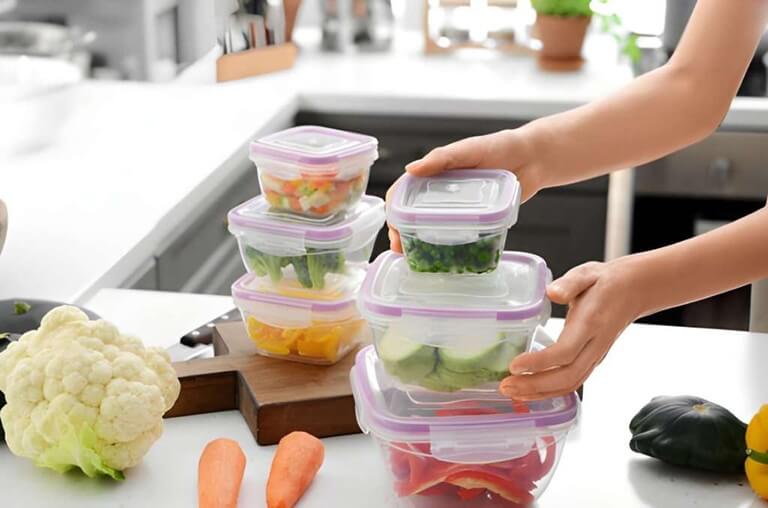
But by Wednesday? That gorgeous pasta feels sad and stinks and goes in the garbage!
You can’t blame your refrigerator. We imagine the fridge is really a magical box that is capable of freezing time.
What Makes the Choice of the Food Storage Container so Important?
A good food storage container is a barrier that keeps the air, the moisture, and the bacteria out from this 3 main elements that make food rot. If there’s an airtight connection, cold air dries out food and hastens spoilage.
Consider food as a space-line traveller. This refrigerator is cold and rough. The spacesuit is known as a container. Armpit leaks or even a small leak around the crotch can get the astronaut in trouble.
If you have a plastic tub that is old and warped, and it has a loose lid, air gets in. Bacteria grow on oxygen, and oxygen is carried in the air. Air also takes moisture out of the food. This is what produces the “fridge burn” effect and cardboard-flavored chicken!
The millions of tons of food that families are wasting every year are worsened by poor home storage. A really tight seal will prevent any of this from happening. It retains the desirable moisture in the crop and the undesirable bacteria out of the crop.
Which of the following would be the best material to keep food fresh?
The most suitable materials to store food without any absorption of odours, stains, and deformities are glass and high-quality silicone. It is OK to use plastic for dry foods,but itt doesn’t hold up over time and can release chemicals into hot foods.
Let’s bring a metaphor for discussion, like a pair of clothes, in your cupboard. You have the same thing with plastic as you did with the cotton t-shirt mentioned above: it gets thin, stains easily, and just can’t get rid of strong odors regardless of how many times you wash it.
Glass, on the other hand,d makes a sturdy raincoat. It never shifts shape, it washes clean every time, and nothing goes through it.
Glass Containers
Glass is ideal, indeed the gold standard. It is not like plastic and has no small pores for old food and oil to hide in. Hot lasagna can be placed straight into a glass plate by itself without fear of any melting or chemicals spoiling.
Silicone Containers
Flexible glass is called silicone. Lightweight, durable, and space-efficient. Just be sure it’s a 100% (food-grade) silicone and will last for years and years.
Plastic Containers
All of us have a bunch of plastic tubs that do not match each other. They are inexpensive and easy to scratch, but not very heavy. Every little scratch is a brand-new home for bacteria to grow. If you do have to use plastic, choose plastic items with BPA-free labels and just use them for cold foods such as salads and snacks.
How Long Do Leftovers Last in the Refrigerator?
Foods are safe and good for three to four days if stored at or below 40°F in a sealed container; past the 4-day point, the risk of food poisoning is increased.
Many people believe that as long as the food doesn’t smell bad, then it’s fine. However, the organisms that cause illness are sometimes invisible anodorlessss
To show how different materials measure up against one another when used to store “the typical left-over”, here is a quick reference guide:
| Container Material | Airtight Seal Quality | Stain & Odor Resistance | Average Lifespan | Best Used For |
| Glass | Excellent (with clip lids) | Perfect (No stains) | Many Years | Nevertheless, hot fare, soups, meats . . . |
| Silicone | Very Good | High | Years | Snacks, sandwiches, freezing |
| Cheap Plastic | Poor to Fair | Low (Stains easily) | A few months | Hot beverage or drink. |
Cooking for the weekend?
Doesn’t mean that you have to purchase an entire new kitchen set today. Making food last longer doesn’t start when it’s time to take it out of the freezer or fridge; it begins now with some smart moves.
Let it cool first: Do not immediately place boiling hot foods into closed containers. It starts the steam, and because of this, condensation or water drops form inside. Maps become soggy and moldy when wet. Allow it to stand for a couple of minutes on the counter to cool down first.
Double-check the seals: Examine the rubber sealing inside the container lids. If it leaves room to move around or is crushed or filled, then it can no longer be airtight. Hand wash these rings for a prolonged life.
Pack them: Select a box on the right dimensions for how much food you have. Place a small amount of mashed potatoes into a large bowl; the bowl will be largely empty of potatoes. The faster the more air there is, the more rapidly the things will go bad.
Plastic food storage containers that you have to replace frequently can let drying air get at your food, and food-borne bacteria can hide within the flimsy walls – a glass or heavy-duty silicone container is not going to let this happen. Waste will be reduced, tons of food will be saved, and every lunch will be delicious.
Popular on OTW Right Now!




About The Author

Gagan Bhangu
Founder of otechworld.com and managing editor. He is a tech geek, web-developer, and blogger. He holds a master's degree in computer applications and making money online since 2015.