
Solar Panel Buying Checklist for First-Time Users
Buying a solar panel for the first time can feel confusing because specifications, sizes, outputs, and connection types are not always easy to compare. A simple checklist helps you focus on what matters most: how much power you need, where you plan to use the panel, how durable it is, and whether it will work with your existing equipment. Instead of choosing based on marketing claims or the lowest price, look at real performance factors such as efficiency, portability, weather resistance, and cable compatibility. When you evaluate these points in a structured way, you reduce the risk of buying a panel that is too weak, too bulky, or poorly matched to your battery or power station. That makes your first purchase more practical and more cost-effective.
Know What You Need Before Buying Solar Panels
Identify Your Power Needs and Usage Scenarios
Start with a reasonable estimate of power. Count the watt-hours consumed by the devices each day and calculate how many are needed to charge your battery or battery station with a solar panel during the period of sunshine you have. Coolers, lights, or larger backup setups require significantly more input than small electronics. Take into account where and when you’ll be using the panel. There are various charging patterns, such as camping trips, van travel, emergency backup, and outdoor work. For those who frequently charge in open spaces where there are reflective surfaces like snow, concrete,e or sand, a bifacial panel can capture more light and boost output. Considering how you use your energy, why you need to charge it, and what condition you will need it to be set up in can help to limit your choices quickly.
Choose Between Portable and Fixed Solar Panels
For those who require mobility, speed of deployment, and ease of transportation, portable solar panels are ideal. They are perfect for campers, road-trippers, emergency backup, and those who do not have a lot of space. Fixed panels are best for long-term installation and are not as affected by weight and folding design, but are more affected by constant exposure and stable mounting. For first-time users, portable models can be advantageous due to the ability to test the product in different environments and to easily put away the product when not in use. For instance, the Anker SOLIX PS200 Bifacial Portable Solar Panel is built to be portable with a foldable design and a total weight of 11 lb with the stand. The lighter design makes carrying and setup easier, particularly for those users who do not wish to have a permanent installation or bulky equipment.
Your Essential Solar Panel Buying Checklist
Compare the Most Important Features
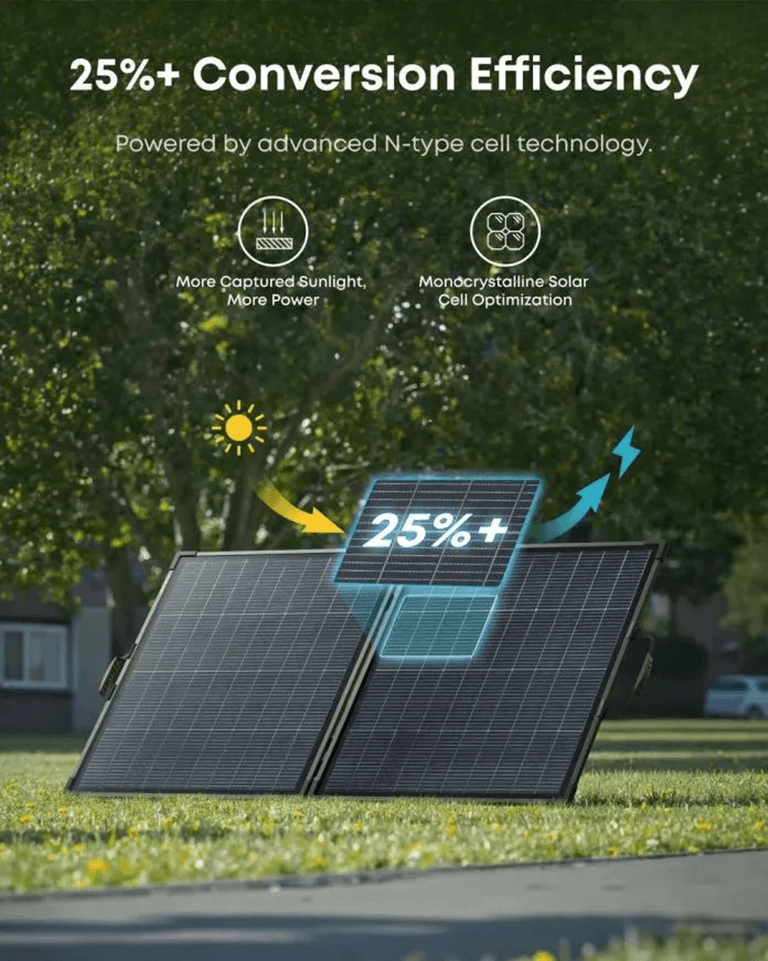
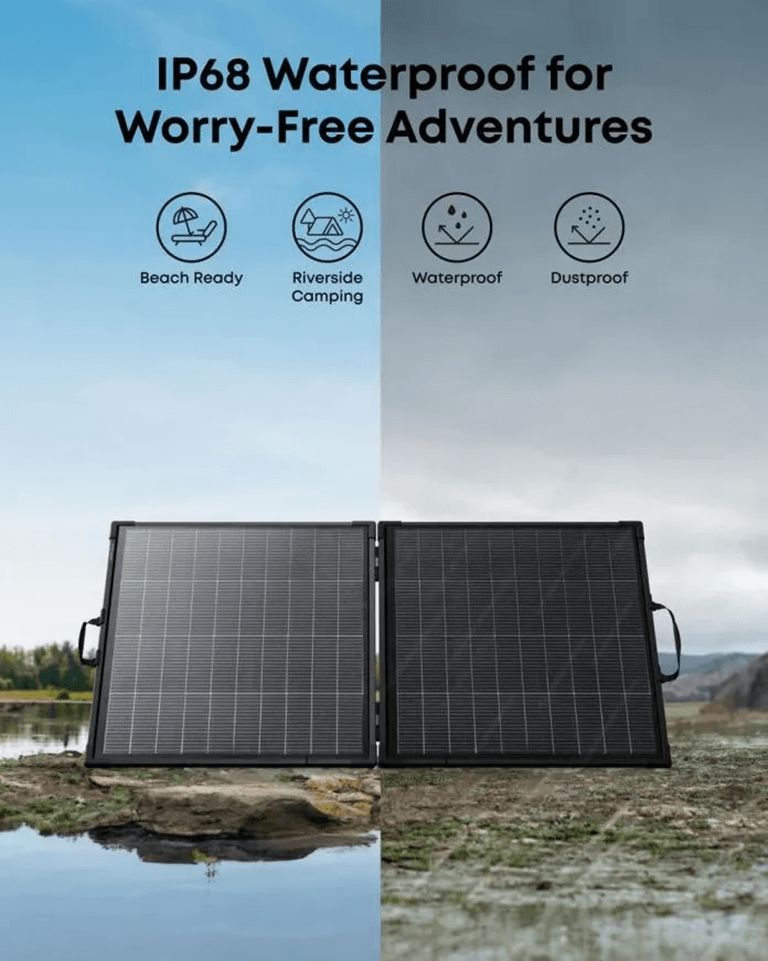
Prioritize the features that will impact the use of the product. One of the key factors is conversion efficiency – a higher efficiency means that a panel can generate more electricity from the same amount of sunlight. Check for newer technology in cells that helps to minimize heat losses and keep the performance up. Strong conversion efficiency of next-generation N-type solar cells, with a conversion efficiency of 25%+, helps the Anker SOLIX PS200 Bifacial portable solar panel maintain high performance in challenging outdoor environments. It also features two-sided generation through reflected light on the rear of the cells in the proper setting,g which can provide up to 10% more energy. One of the other most important factors for first-time users is portability. A lighter, flexible panel can be carried, moved, and stored easily. Durability is important as well: this model features a reinforced aluminium frame, impact-resistant materials, and water and dust resistance of IP68 is a plus if you think you’ll get some rain, mud, or rough ground.
Check Product Details Before You Buy
Don’t order based on a product’s headline claims; read the full details about the product before ordering. Look at the total weight, the folded design, any extras, the length of the cables, the type of connectors,s and the warranty. These details affect setup convenience more than many buyers expect. For example, a panel may seem well priced until you realize you need extra cables or adapters to connect it properly. The Anker SOLIX PS200 Bifacial Portable solar panel includes two 8.2 ft (2.5 m) solar charging cables, one 1.6 ft (0.5 m) XT-60i solar charging cable, a quick start guide, and a safety card, which helps simplify initial use. It’s also important to verify the durability of the appliance over time. With 10 years built in and a 5-year warranty, it provides first-time buyers with a better sense of the value to be gained over the long haul. These details, taken before shopping, can assist you in avoiding any shocks and making an educated decision.
Common Buying Mistakes First-Time Users Should Avoid
Choosing Based Only on Price
Price is one roadblock;k, it’s not the determining one. It is important to note that a lower-cost panel may not be as efficient, may be made from less durable materials, may not be as weather-proof, or may have a reduced warranty. This can result in reduced charging speed, increased wear, and increased replacement costs. Many first-time users believe that panels with the same wattage perform the same, but in real life, many factors such as the quality of the cells, construction, and environmental durability are at play. Taking time to consider these details often pays off in the long run with higher value than opting for the lowest initial cost. An easier-to-carry panel that will work better in hot weather and withstand repeated use outdoors can save time and money. When you’re comparing, see how much you’re getting for your money rather than how many you’ll see on the product page.
Ignoring Compatibility and Future Expansion
Check for compatibility prior to purchase, not post-purchase. Make sure the panel’s connectors, voltage range and cable configuration are compatible with your battery, power station or charging controller. If you have included cables, these can simplify setup, but must be fitted properly to your system. It’s also a great idea to plan ahead. If you are planning on adding more storage or spending more time off-grid or are looking for quicker charging, consider a panel that can accommodate such possibilities. Those who don’t anticipate future growth will find that they’re replacing a panel sooner than they would like to be. The better solution is to purchase a panel that is sufficient for the present requirements with some room to grow. This helps to have a more flexible setup and to minimise the risk of an early upgrade.
Conclusion
When you have a clear checklist to follow, a first purchase of solar panels becomes much easier. First, determine your power requirements, and then select an appropriate panel style based on your travel, storage, and use. Check their portability, durability, weather resistance, accessories, and warranties before purchasing. Product details are important, particularly for compatibility and value. Most importantly, don’t purchase for the price or “headline” wattage. The best part is a well-matched panel that will perform better, be easier to use, and be more suitable for your future plans, as well as work well outdoors. When you can follow the checklist correctly, you can purchase your initial solar panel with assurance and fewer compromises.
Popular on OTW Right Now!

About The Author

Gagan Bhangu
Founder of otechworld.com and managing editor. He is a tech geek, web-developer, and blogger. He holds a master's degree in computer applications and making money online since 2015.