
From Manual Buying to Intelligent Systems: The Rise of Agentic Procurement AI
The procurement process has experienced a significant change whereby organizations are no longer involved in manual purchasing and time-consuming procedures, but rather in intelligent, automated purchasing methods. The old methods of procurement used human labor, spreadsheets, and fragmented processes, which tended to create inefficiencies, delays, and a lack of visibility in the supply chain. The emerging complexities in procurement systems due to the global expansion of business and the involvement of intricate supplier networks have made procurement systems demand smarter, quicker, and more dependable than ever.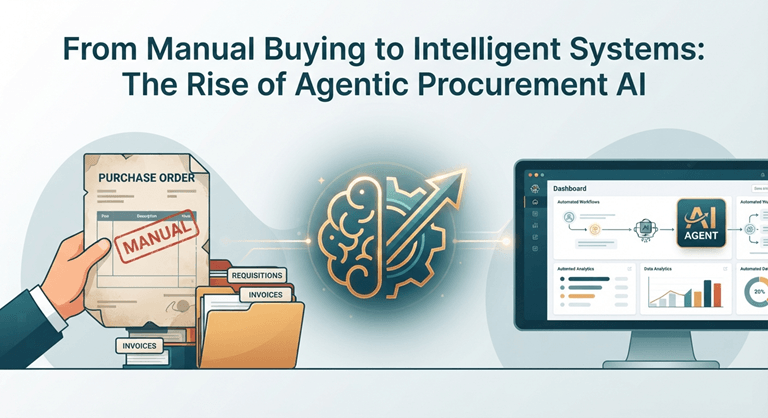
With this changing landscape, agentic AI procurement software is reshaping how organizations conduct sourcing, vendor management, and purchasing decisions. Through artificial intelligence, automation, and autonomous decision-making processes, businesses will be able to automate procurement processes, minimize operational risks, and gain the greater efficiency and control necessary for accuracy, compliance, and strategic processes.
Intelligent Workflow Automation In Procurement Systems
The modern world demands more from procurement processes than just the completion of specific tasks; it demands that they be automated, while allowing for smart decision-making and flexible workflow organization in the complex procurement environment.
With agentic AI procurement software, organizations can automate a multitude of repetitive procurement activities and add intelligence to processes. These systems use past information, performance of the suppliers, and industry trends to come up with informed decisions. The customization can be eliminated, making the organization more efficient, faster, and more accurate in procurement, and benefiting it. Intelligent automation also establishes uniformity in processes so that procurement teams can concentrate on strategic operations like relationship management and cost optimization of suppliers, whilst upholding operational perfection in any sophisticated supply chain setting.
Data-Driven Decision Models For Procurement Transformation
The introduction of state-of-the-art analytics and AI lessons is revolutionising the idea of procurement, as they provide data-driven decisions in sourcing and supplier management processes.
Implementation of the procurement transformation strategies enables organizations to have access to real-time information to make smarter decisions. The AI-based systems assess the performance of suppliers, the price dynamics, and demand to determine opportunities and risks. Such an approach, which is data-driven, improves visibility and paves the way to proactive choices by procurement teams. Procurement Intelligence helps organizations increase efficiency, reduce waste, and develop procurement processes that are resilient to changes in the market by remaining transparent and accountable throughout the process.
Autonomous Sourcing Systems With AI Integration
AI is helping organizations automate the vendor selection process, minimise human intervention in negotiation, and manage contracts with minimal human oversight.
1. Intelligent supplier discovery and evaluation
With the help of big data, AI systems can keep a close eye on the top supplier for their performance, price, reliability, and compliance. This reduces the manual work and can help ensure that the most vendors and vendor selection align with business objectives.
2. Automated negotiation and contract optimization
Artificial intelligence (AI) tools are able to simulate negotiation, suggest the best pricing strategy, and create contracts. This makes the process more efficient and offers good conditions and less risk of procurement.
3. Real-time market intelligence insights
The ability to access the information in real time also makes it possible for organisations to know the price fluctuations, supplier risks,s and the market environment. These lessons reinforce quicker and better-informed actions with regard to procurements.
4. Continuous supplier performance monitoring
Automated systems are used to ensure supplier KPIs are tracked and their compliance with the service level agreements is verified, along with where there is room for them to improve.
5. Risk identification and mitigation strategies
Proactive mitigation: AI tools identify risks in the supply chain and proactively deal with them (e.g., supplier delays or geopolitical issues), ensuring the continuity of the supply chain.
Strategic Value Creation Through Intelligent Procurement
Procurement has ceased to be a transactional activity and has become a strategic source of value, innovation, and competitive advantage for business organizations through effective procurement transformation.
1. Enhanced cost optimization strategies
AI procurement is utilized to ensure better financial results and is used to look for ways for pricing and contract provision where suppliers can’t, and purchasing habits that are cost-efficient.
2. Improved supplier collaboration models
Digital sites allow for greater collaboration with suppliers, better communications, transparency, and relationships on a long-term basis.
3. Increased operational efficiency levels
Automation helps to reduce the number of people involved in manual procedures, boost operational speed, and minimize errors, giving the entire procurement process an efficiency boost.
4. Strengthened compliance and governance
The application of AI systems makes sure that the regulatory standards and internal policies are followed, which makes the compliance risks lower and accountability higher.
5. Innovation-driven procurement strategies
The AI insights enable businesses to adopt new procurement models that match the evolving business goals.
Future Ready Systems Powered By Agentic AI
New technology is making the future of procurement seem bright and promising, and it’s all about the concept of autonomous systems that learn and adapt to changing environments.
The next wave of procurement innovation is being propelled by the further development of agentic AI procurement software. They combine machine learning, automation, and real-time analytics into a system that creates self-optimizing recruitment systems. Organizations are able to be more efficient, mitigate risk, and become more agile, as it allows them to be independent in their decisions. This future-oriented strategy will keep the procurement operations competitive and in tune with future business requirements and provide measurable value to operations.
Conclusion
The shift of the manual procurement system to an intelligent AI-based system is a monumental move towards the way business is conducted regarding purchasing and supplier relationships. With innovative technologies, businesses can become more efficient, more cost-effective, and make new decisions. By implementing a systematic procurement change cycle, an organization can foster robust procurement processes, better equipped to adapt and scale for sustainable growth, thereby contributing to its overall success and agility.
Market dynamics in the contemporary competitive business setting dictate that organizations be ready to constantly evolve in response to market changes by undertaking successful procurement transformation. Implementing procurement processes that leverage artificial intelligence (AI) is increasingly common in modern businesses, aiming to optimize procurement workflows, enhance supplier relationships, and improve decision-making efficiency. AI tools like Procol shed light on the more complex procurement processes, giving companies an opportunity to become savvier in their work, less likely to cause conflict, and more mindful in their supplier relationships. This is eventually possible to support sustainable growth and scalability in the long-term, within procurement ecosystems.
Popular on OTW Right Now!




About The Author

Gagan Bhangu
Founder of otechworld.com and managing editor. He is a tech geek, web-developer, and blogger. He holds a master's degree in computer applications and making money online since 2015.