
How Laboratory Safety Equipment Protects Researchers
Laboratories are places where important discoveries happen every day. Scientists, researchers, and technicians work with chemicals, biological samples, and specialized equipment to conduct experiments and develop new solutions. While these activities help advance science and technology, they can also expose workers to various risks if proper safety measures are not in place.
This is why laboratory safety equipment plays such an important role. It helps create a safer working environment and reduces the chances of accidents, injuries, and exposure to harmful substances. From protective clothing to ventilation systems, every piece of safety equipment serves a specific purpose in protecting the people who work in laboratories.
Why Laboratory Safety Matters
Research laboratories can also have hazardous materials which may be dangerous if not handled appropriately. Chemicals can produce toxic vapors, biological samples can contain harmful microorganisms, and there are processes that may generate airborne particles that are unhealthy to inhale.
Even the most experienced scientists can make errors. It can cause serious health concerns in case of any small spills, equipment failure, or accidental exposure. Researchers are protected from these dangers by appropriate safety equipment.
Safety isn’t just a matter of obeying the rules. It’s about providing a work environment where the researcher can feel confident that protective measures are in place and can allow them to concentrate on their work.
Personal Protective Equipment Provides the First Layer of Protection
Personal protection equipment (PPE) is among the most frequent types of laboratory safety equipment. These are all intended to give safety to the researchers if they come in direct contact with harmful substances.
Lab coats help prevent chemicals from coming into contact with clothing and skin. Safety goggles keep harmful substances, flying particles, and splashes out of the eyes. When working with chemicals, biological material,s or contaminated equipment, gloves are used to protect you.
Face shields, respirators, or protective shoes might also be worn in certain conditions. The type of equipment used is related to the activities and the risks involved.
While it is important to use PPE, it is more effective when used together with other laboratory safety measures.
Laboratory Fume Hoods Help Control Harmful Vapors
Many laboratory procedures involve chemicals that release fumes or vapors into the air. Exposure to these substances can be harmful and may lead to any type of health effects, both short-term and long-term.
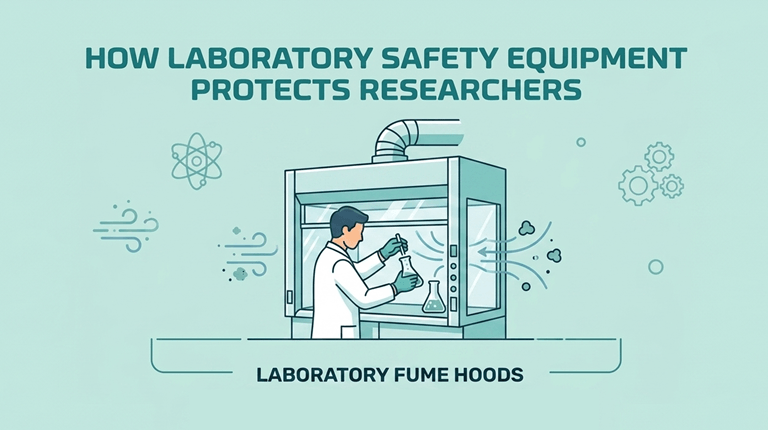
This is where laboratory fume hoods become essential. It works to capture and remove harmful fumes from the breathing zone of researchers in these systems. They vent contaminated air from the area of work, reducing exposure to hazardous substances.
Chemicals that create toxic vapors, strong odors, or potentially dangerous airborne particles are used in the lab within a fume hood. Well-maintained fume hoods help to enhance the air quality and create a safer laboratory environment.
If the ventilation systems are not working properly, harmful contaminants may be dispersed throughout the laboratory and could pose a health risk to all who work in the laboratory.
Biosafety Cabinets Protect Researchers and Samples
In laboratories that handle biological materials, biosafety cabinets play an important role in maintaining safety. These enclosed work areas are designed to avoid contamination through control of the air movement and filters.
They are designed to safeguard the researcher from exposure to bacteria, viruses, and other biological agents in the biosafety cabinet. Meanwhile, they help to keep vulnerable specimens safe from contamination that might impact research findings.
The dual protection of biosafety cabinets is particularly useful in diagnostic laboratories, the development of pharmaceuticals, and medical research.
Emergency Safety Equipment Reduces the Impact of Accidents
Even with strict safety procedures, accidents can still happen. Laboratories need to be ready to act promptly in case of emergencies.
Researchers are able to rinse harmful substances out of their eyes before they can be absorbed by using eyewash stations. Safety showers are used for a quick cleanup of chemicals in case of a chemical spill.
Another safety tool that is important is the fire extinguisher. Various extinguishers are used to fight various types of fires, and, as part of laboratory personnel, it is essential to know how and when to use them.
Emergency equipment can minimise the impact of accidents and can help stop minor accidents escalating to major emergencies.
Proper Storage Systems Improve Safety
Safe storage is an important aspect of laboratory safety. Many chemicals must be handled and stored in a specific way to avoid undesirable reactions.
Chemical storage cabinets aid in the separation of incompatible chemicals and minimize spills or leaks. Generally, flammable items are kept in fireproof cabinets to reduce the risk of fire.
Correct labelling is also very important. The clear labelling enables researchers to identify materials easily and to understand any risks associated with the materials.
By implementing good storage practices, you can have a more organized laboratory and have less chance of accidents.
Air Filtration Systems Support a Healthier Environment
Many labs face the challenge of good air quality. Some activities may cause dust, fumes, vapors, or very small particles to be released into the air.
Air Filters are used to remove such contaminants and to keep the environment cleaner. A high-efficiency filtration technology can be used to trap very fine particles, which may otherwise be left in the air.
Better air quality is good for researchers and for lab processes that are sensitive to air quality. It contributes to lower health risk and more reliable and accurate results.
Training and Equipment Work Together
Equipment will only help with the safety puzzle if it’s used properly. Researchers should also be familiar with the proper use of that equipment.
Safety training is often given in the laboratory to educate employees on safety procedures, response to emergencies, and equipment operation. Training is delivered regularly to ensure that safe practices are reinforced and workers are kept up-to-date on potential hazards.
If researchers know how to use safety equipment correctly t, they will be better able to keep themselves and their peers safe.
When combined with excellent training, these safety items can provide a better culture of safety in the laboratory.
Safety Equipment Supports Better Research
Lab safety equipment is designed to protect researchers, but there are other advantages, too. Accidents and contamination are minimised in a safe lab environment.
When scientists are safe in their environment, they can concentrate more easily on their research. Other lab equipment, such as fume hoods, biosafety cabinets,t s and filters, can also help ensure the integrity of experiments by minimizing contamination hazards.
This means safety equipment not only helps to keep workers safe, but it also helps to ensure that scientific research is of high quality and reliable.
Conclusion
Laboratory Safety Equipment is essential for any laboratory. Every piece plays a vital role in minimizing risks and fostering a safer workplace, whether it’s personal protective equipment, emergency response gear, ventilation systems, or storage solutions.
While scientists have numerous possible dangers at work, following safety precautions significantly lessens those dangers. Laboratory fume hoods, biosafety cabinets, air filtration systems, and emergency stations all collaborate to safeguard and protect people and research.
Safety in the laboratory isn’t just a matter of the law. It’s a sensible precaution to keep researchers safe, productive, and confident to keep making significant discoveries.
Popular on OTW Right Now!




About The Author

Gagan Bhangu
Founder of otechworld.com and managing editor. He is a tech geek, web-developer, and blogger. He holds a master's degree in computer applications and making money online since 2015.